Data Centers
- admin691592
- 1 day ago
- 2 min read
Why Are So Many Data Centers Being Built?
It is a fair question. Across the country, new data centers seem to be appearing everywhere. They are large, consume significant amounts of electricity, and often generate questions from nearby communities. So why are companies investing billions of dollars in them?
The answer comes down to one word: latency.
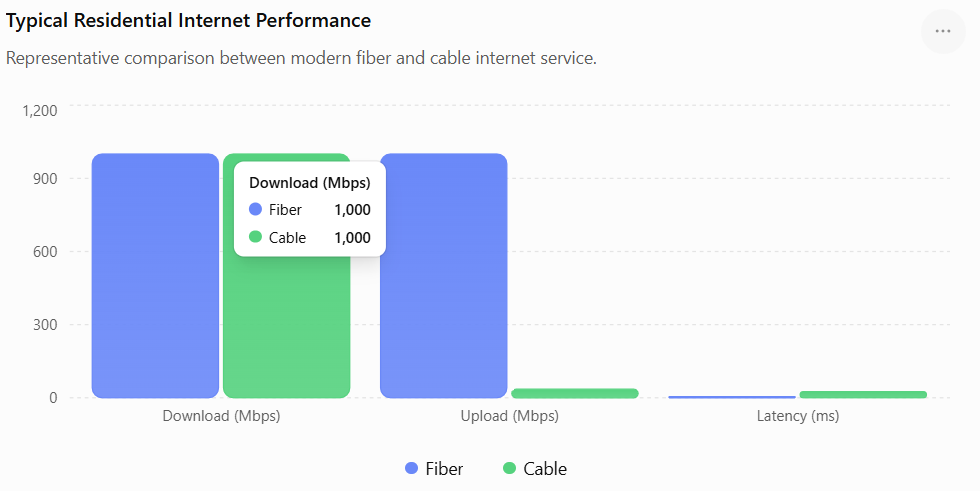
Latency is the amount of time it takes data to travel from your device to a server and back. While we often focus on internet speed, latency is just as important. A fast connection with high latency can still feel slow.
Every time you:
Join a Microsoft Teams or Zoom meeting
Watch Netflix or YouTube
Use ChatGPT or another AI tool
Play an online game
Make a credit card purchase
Access cloud-based software
Use electronic medical records
Control smart home devices
...your information is traveling to and from a data center.
The closer that data center is to you, the faster your information can be processed. That means:
Clearer video calls
Faster websites
Better gaming experiences
More responsive AI
Improved reliability during periods of heavy demand
As artificial intelligence continues to grow, this becomes even more important. AI applications require enormous computing power and process vast amounts of information in real time. Much of that work happens inside data centers.
That does not mean every concern about new data centers is unfounded.
Communities should ask thoughtful questions about:
Energy consumption
Water usage
Noise
Land use
Infrastructure improvements
Community benefits
Those are reasonable conversations to have.
But it is also important to recognize that data centers have become essential infrastructure—much like highways, airports, railroads, and power plants. They support the digital economy that businesses, schools, hospitals, governments, and families rely on every day.
As our dependence on cloud computing and AI continues to grow, data centers will increasingly become part of the critical infrastructure that keeps our communities connected and our economy moving.
The discussion should not simply be whether we build them—it should be how we build them responsibly, efficiently, and in partnership with the communities they serve.
Comments